Professor Yanni Yu and her team at the Weihai Institute for Interdisciplinary Research of Shandong University published a research article titled “The impacts of peace education: A meta-analysis” in theInternational Journal of Educational Development, a Q1 education journal under Elsevier.
The paper is co-first authored by Professor Yanni Yu and Wenzhuo Liu, a master’s student at the institute, with Xin Meng, a PhD candidate at the institute, serving as the corresponding author.
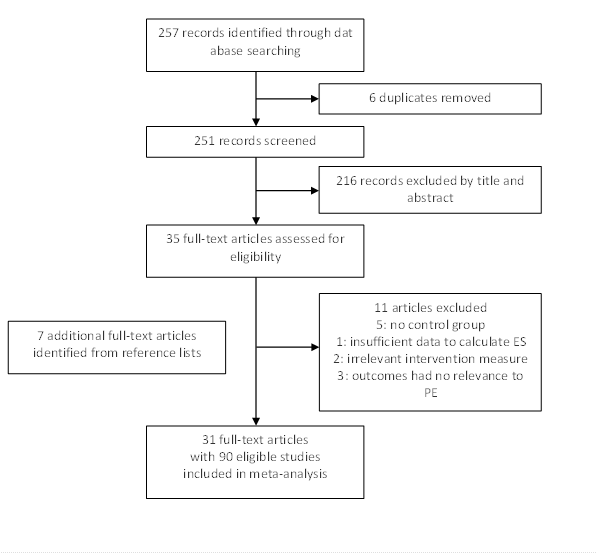
Figure1.The selection process for studies included in the meta-analysis.
In today’s context of frequent global geopolitical conflicts and rising social violence and instability, the likelihood that children are exposed to direct or indirect risks of violence has increased significantly, heightening societal demand for educational interventions that effectively prevent and mitigate violence. Against this backdrop, peace education is widely regarded as an important tool for addressing violence. The United Nations has long promoted peace education as one of the key instruments for achieving global peace and sustainable development. With the development of peace education, many countries have recognized peace education as one of the educational agendas and have taken measures to support and promote peace education in many areas, including curriculum development and school activities. Although peace education is widely implemented, comprehensive quantitative assessments of its effectiveness across diverse contexts and populations remain scarce, and this research gap hampers evidence-based program design and dissemination.
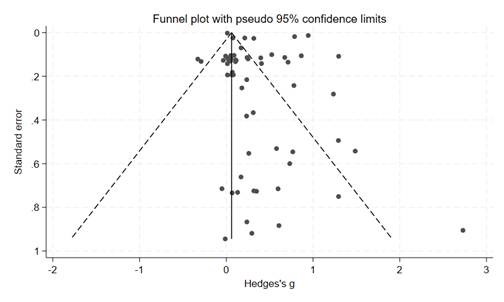
Figure 2.Funnel plot of publication bias in positive peace education performance.
Therefore, based on the above background, this paper employs a meta-analysis to examine 90 peace education intervention trials involving approximately 15,000 children. The results indicate that: (1) Compared to the control group, participants in peace education programs show significant improvements in social values, conflict resolution skills, and positive personal qualities. (2) These participants also exhibit significant reductions in aggression and violence. (3) Subgroup analysis reveals that the intervention effect on positive dependent variables is stronger among students in high school and above, and in traditional classroom settings. Furthermore, peace education programs with a total intervention time of 1,440 minutes or less demonstrate stronger effects on negative dependent variables. These findings offer important policy implications for the implementation of peace education programs.
This research was funded by the National Natural Science Foundation of China (Grant No. 72473083).
Article link:https://www.sciencedirect.com/science/article/pii/S0738059326000660?dgcid=author


 Address: No. 180 Wenhua West Road, Weihai City, Shandong Province, China
 Tel:+86-0631-5688246
 Email: whqyy@sdu.edu.cn

