Professor Ning Zhang’s team from the Weihai Institute for Interdisciplinary Research, Shandong Universitypublished a study on Resource and Energy Economics entitled "The role of bureaucratic incentives in the effectiveness of environmental regulations: Evidence from China." The paper explores how bureaucratic incentives influence the effectiveness of environmental policies. The first author is Assistant Professor Haowei Yu, the second author is Assistant Professor Guanglai Zhang fromJiangxi University of Finance and Economics, and Professor Ning Zhang is the corresponding author.
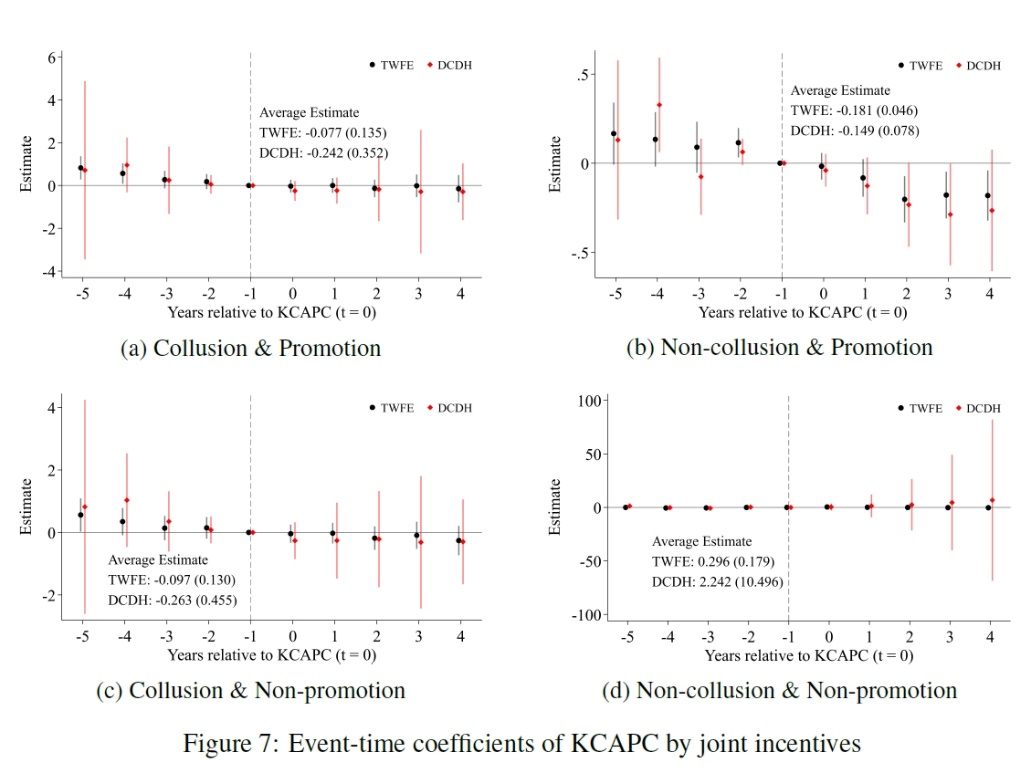
Using China’s Key Cities for Air Pollution Control (KCAPC) policy as a case study, this research analyzes the policy’s impact on air pollution mitigation and its mechanisms, with a focus on how local bureaucratic promotion motivations and collusion motivations affect policy effectiveness. The study first constructs a game-theoretical model between local officials and polluting firms to theoretically examine the KCAPC policy’s effects, mechanisms, and constraints. Empirical validation using city- and firm-level data on sulfur dioxide emissions reveals that the KCAPC policy reduced urban-level air pollutant emissions by 12.2%–13.8% and firm-level emissions by 11.2%–13.5%, with consistent results across different analytical levels. Crucially, the policy was effective only in cities where officials had strong promotion incentives and no collusion incentives, underscoring the pivotal role of bureaucratic incentives in environmental regulation outcomes.
|
|
|
|
This study was supported by the National Natural Science Foundation of China (72203131, 72303084, 72033005).
Full-text link:https://doi.org/10.1016/j.reseneeco.2024.101474


 Address: No. 180 Wenhua West Road, Weihai City, Shandong Province, China
 Tel:+86-0631-5688246
 Email: whqyy@sdu.edu.cn

