Professor Ning Zhang and Dr. Penghu Zhu, from the Weihai Institute for Interdisciplinary Research at Shandong University published a research article titled"How does civilization promote happiness? Insights from the Civilized Cities Program in China"inHumanities and Social Sciences Communications, a journal under the Nature Portfolio. Dr. Penghu Zhu is the first author, and Professor Ning Zhang is the corresponding author.
Urban governance aims to enhance overall social welfare, while residents’ happiness frequently falls by the wayside. Civilization, as a critical factor influencing residents’ happiness, has not yet been fully understood regarding its impact and mechanisms. This paper uses the China Family Panel Studies data, which includes around 50,000 samples ranging from 2010 to 2020, to construct a multi-period difference-in-differences model. It finds that China’s highest honor for urban brands, the civilized city program, leads to an average increase of 2.6% in residents’ happinessas measured by life satisfaction. This happiness effect is robust but temporary, gradually diminishing within five years following the honor. The happiness effect is heterogeneous across different waves and city sizes and is effective only for urban residents. Mechanism analysis indicates the happiness effect of the civilized city program through three channels: government efforts, social trust, and identity recognition.
Additionally, our research indicates that the civilized city initiative improves residents’ perception of environmental quality and reduces income inequality. These findings provide insights into understanding how the civilization tournament policy promotes happiness.
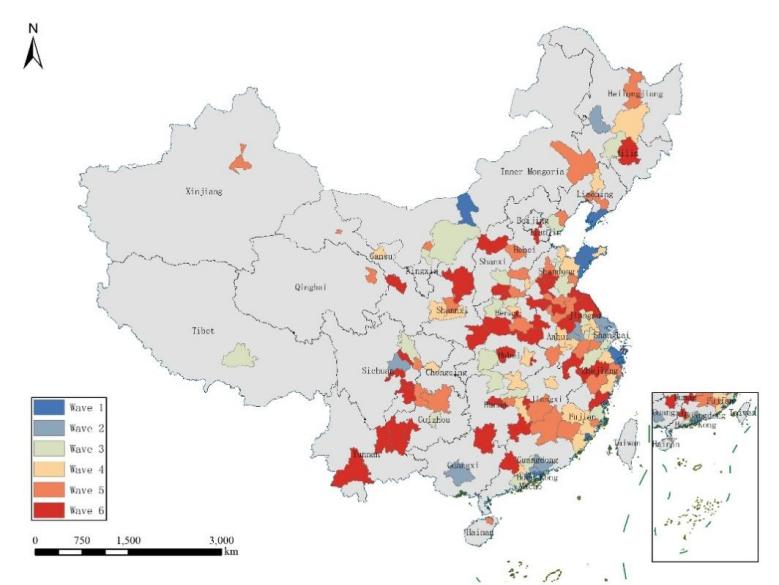
Fig. 1 Distribution of Civilized Cities in China (prefecture-level).
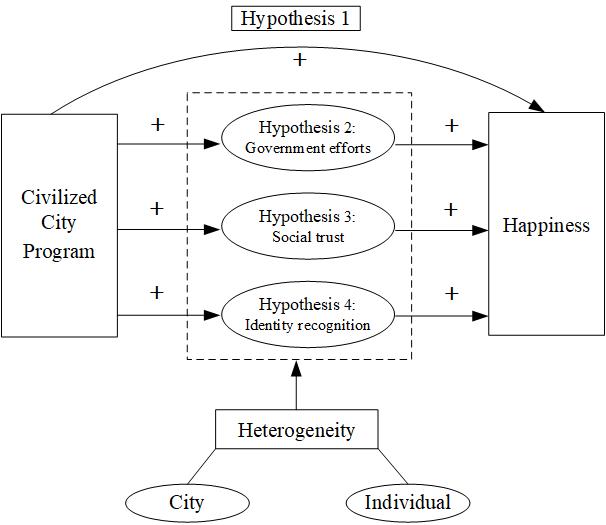
Fig. 3 Theoretical framework and hypothesis.
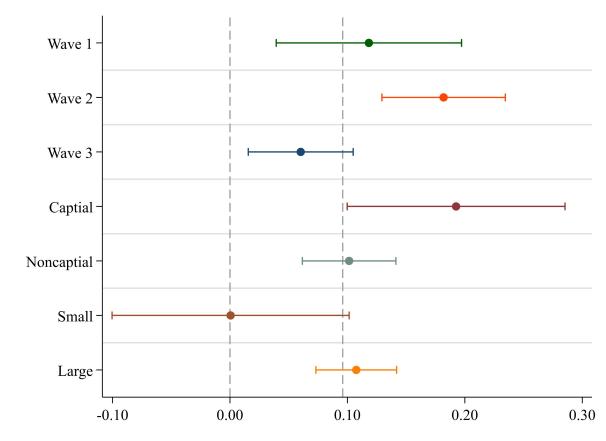
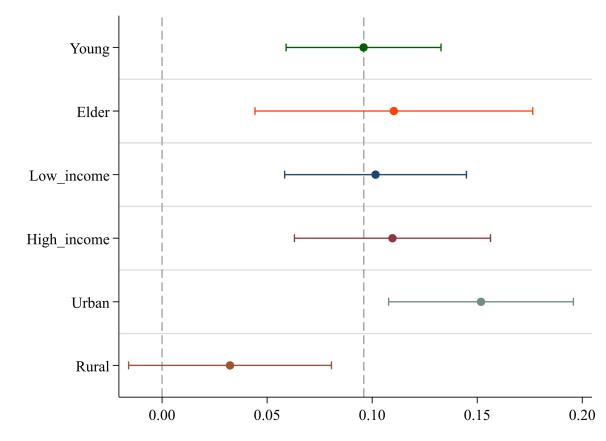
Fig. 8 & Fig. 9 Heterogeneous happiness effects.
Humanities and Social Sciences Communicationsis the only journal under the Nature Portfolio dedicated to the humanities and social sciences. It is jointly indexed by SSCI and AHCI, ranked in Q1 in both the humanities and social sciences categories. Its Journal Citation Indicator (JCI) ranks first among 265 interdisciplinary journals in the field of social sciences, making it a highly influential journal in the global humanities and social sciences community.
This research is supported by the National Natural Science Foundation of China (Grant No. 72033005), the National Postdoctoral Program for Innovative Talents (Grant No. GZB20230392), and the Youth Project of the Fujian Provincial Social Science Foundation (Grant No. FJ2021C083).
Original article link:https://www.nature.com/articles/s41599-024-03539-8


 Address: No. 180 Wenhua West Road, Weihai City, Shandong Province, China
 Tel:+86-0631-5688246
 Email: whqyy@sdu.edu.cn

